RAM Series 2 2026
Series 2 Vol 01
Nov 2026

Thanks to Trev Benneworth (Editor of the RAM from 1999 to 2023) and his many contributors for providing us with memories, news, insights, and a few jokes along the way...

This Series 2 first issue is just a quick one to bed down the updated software. It does not contain a lot of content, but what is here is important.
I hope you will find it interesting!
Please keep your contributions coming, they are important to all of us.
Another change!
The RAM (on the web) is now 'responsive' - that is, it will more readily change shape and size depending on the size of screen you are using (desktop, tablet, or phone).
The navigation links/menus will change from full width on larger screens and convert to a drop-down 'hamburger' style on smaller screens.
Some pages will still work best on a large screen.
Also, many of the images (not all!) on the website pages will enlarge if you click on them.


A thought for November:

It’s November: that awkward time of year when it's 35 degrees at 2:00 PM, but you still have to start every email with 'Can you believe it’s nearly Christmas?!' and decorate with snowy scenes.


Good News: The RAM is to continue!

My name is Brad Carlisle and I have put my hand up to take over from Trevor Benneworth in the production of the
RAM.

Hopefully with your support (
and contributions!) I can maintain the high standard.

My Grandfather was a Machinist in the RAN and served on the HMAS Canberra. My Father was in the Australian CMF.


I joined the Boy Scout movement at an early age (and the skills I learned there helped a lot with Rookies).
I was an 'Army Cadet Under Officer' at Sydney High School specialising in Signals/Communications (this also helped with Rookies and RADSchool).

I joined the RAAF and went through Rookies on Course 1199 (
Bonners U Beaut Beasties) in Jan 1973.

I am still in touch with a few even after 53 years.

I arrived at RADSchool (Laverton, Vic) in April 1973.

I was posted to 486SQN (Richmond, NSW) in November 1974 and worked on C130-A and C130-E Hercules avionics (coincidently, No. 486 Maintenance Squadron was established at RAAF Station Schofields, New South Wales, on 26 August 1946 - 26 August is also my birthdate!). A group of us went to the USA for C130-H training in 1978 (Lockheed in Marietta, Georgia, Texas Instruments in Dallas, Texas, and Dyess Air Force Base in Abilene, Texas).

I had a short posting to 33 SQN in 1981 to work on the Boeing 707 VIP aircraft and then returned to 486 SQN until discharged in Jan 1985. I was awarded the "
Chief of Air Force Technical Services Quality Assurance Medallion" in 1984.

I then ventured into 'Civvy' world (boy, what a difference!) and worked 1/2 time as a medical equipment tech and 1/2 time as a hearing aid tech for "Richards Medical" and eventually was promoted to Manager of "Richards Hearing Systems". During that period, I was also sent for training to the USA (Dyonics in Boston, California Intraocular Lens Co. [CILCO] in California), and Germany (HANSATON in Hamburg).

In 1988, I took up an offer to move from Sydney to sunny Queensland and take over as manager of "Rexton Australia" (another hearing aid manufacturer). Rexton had been bought by Siemens AG and while it operated for a while as "Rexton Australia", it was renamed as "Siemens Hearing Instruments Australia" and now "Sivantos". More training in the USA (Rexton in Minnesota), Germany (Siemens in Frankfurt), and Singapore (Siemens). The Australian company grew and went from 4 employees in 1988 to over 30 in 1999. I was also able to work with my good friends Wayne and Sue Smith, who I met at 486 SQN. Wayne hand-crafted many hearing aids, including a set for ex-Prime Minister,John Howard!

Time for another change, so I set up my own company in Brisbane with my businesss partner (an audiologist) in 1999. "
Phoenix Hearing Instruments" was born!

We started manufacturing hearing aids, but soon discovered that other syles of amplification had greater benefits along with the need for a source of well performing and reliable Assistive Devices (not hearing aids). These included Personal Amplifiers, custom Tinnitus noise generators, alerting systems, voice amplifiers, wireless FM systems, paging systems, TV listeners, and audio induction loops. We also provided clinical tools, accessories, and test equipment for the hearing industry.

Sadly in Feb 2022, the business was destroyed by flood and that ended it after 23 years.

This Month we celebrate the formation of:
The permanent Air Board was constituted on 9 November 1920 under the Department of Defence. Its initial purpose was to administer the interim Australian Air Corps (AAC) and plan a permanent, independent air arm.
Its first military members represented a deliberate balance between competing Army and Navy interests. Wing Commander Richard Williams (the Army/AAC choice) became the First Air Member, and Wing Commander Stanley Goble (the Navy/RNAS choice) became the Second Air Member.
Williams compiled and tabled the Air Board's foundational submissions. This work directly facilitated the disbandment of the AAC and the official creation of the Australian Air Force on 31 March 1921 (granted the "Royal" prefix in August).
Website

Side Note:
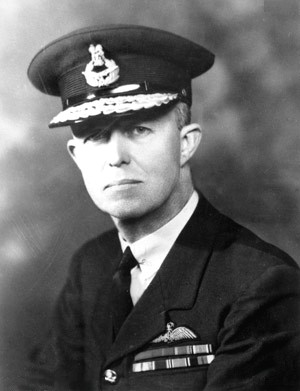
Richard Williams KBE CB DSOAir Marshal Sir Richard Williams KBE CB DSO is widely regarded as the 'father of the Royal Australian Air Force'. He was the first military pilot trained in Australia, and went on to command Australian and British fighter units in the First World War, in what was then known as the Australian Flying Corps. A proponent for air power independent of other branches of the armed services, he played a leading role in the establishment of the RAAF and became its first Chief of the Air Staff; serving in that senior capacity for thirteen years, longer than any other officer since.
No. 1 Communication Unit RAAF – Formed on the 1 November 1939 in Victoria, making it the first of 13 specialised Communication Units raised by the RAAF during the war. Like most RAAF communication and support units of that era, No. 1 Communication Unit did not typically possess an individual, uniquely illustrated personal squadron crest approved with its own heraldic motto. Instead, RAAF personnel from this period wore the standard Royal Australian Air Force Badge.
Unlike frontline combat squadrons, its primary purpose was logistics flexibility. It performed vital but unglamorous support tasks, including transporting freight, ferrying personnel, delivering urgent supplies to isolated garrisons, and supporting regional pilot training. Because its missions varied wildly—from landing on rough, makeshift outback clearings to cruising between major cities—it operated a diverse "hodgepodge" fleet of small utility and transport aircraft, typically utilizing types like the Avro Anson.

Equipped with larger, more robust aircraft like the Lockheed Hudson bomber (modified for transport duties), the unit regularly flew high-profile diplomatic and military figures into newly liberated or active operational zones. On 26 April 1944, a Lockheed Hudson from the unit famously transported the Honourable E.J. Ward, Australia's Minister for External Territories, along with his official party on a critical inspection tour of the frontline territory in Wau, New Guinea.

Following the end of hostilities in August 1945, the RAAF began a massive demobilisation process. Frontline units were quickly dissolved or mothballed, but No. 1 Communication Unit was retained longer than most to help manage the complex administrative and logistical wind-down of regional bases.

The unit continued its transport operations out of Victoria for another three years until it was officially disbanded on 22 July 1948.

No. 460 Squadron RAAF – Formed on 15 November 1941 at RAF Station Molesworth, Cambridgeshire (United Kingdom) as a heavy bomber squadron under the Empire Air Training Scheme.

Joined the Royal Air Force's (RAF) Bomber Command (initially No. 8 Group, then No. 1 Group). Flew the • Vickers Wellington (started operations with the Emden raid on 12 March 1942) and the Avro Lancaster (converted in October 1942, defining its wartime legacy).

Fought heavily across strategic bombing campaigns over Germany, Italy, and occupied Europe, as well as supporting Allied ground forces prior to and during the D-Day landings.

Flew the most bombing sorties (6,262 to 6,264) and dropped the greatest tonnage of bombs (24,856 tons) of any Australian squadron.

Operated the famous Avro Lancaster "G for George", which completed 90 operational missions and is preserved at the
Australian War Memorial.
Read more:
FB RAAF Memories.

No. 467 Squadron RAAF – Formed on 7 November 1942 at RAF Scampton, Lincolnshire (United Kingdom) as an Article XV heavy bomber squadron flying Avro Lancasters.

Operated from RAF Scampton (Nov 1942), RAF Bottesford (Nov 1942 – Nov 1943), and RAF Waddington (Nov 1943 – 1945).

It did not receive an official Squadron Badge, however, the squadron and its individual aircraft became famous for distinct unofficial emblems, nose art, and mottos:
"P" for Peter (Lancaster): Featured a memorable nose art emblem of a kookaburra grasping a snake branded with Hitler's face.
"R" for Robert (originally "W" for Willie): Featured an emblem of "King Billy" sitting on an aerial bomb.
"S" for Sugar (Avro Lancaster R5868): A legendary veteran aircraft that completed over 100 operations, now preserved at the RAF Museum London.

Flew 3,833 sorties, lost 118 aircraft, and had 760 personnel killed (including 284 Australians).

Disbanded on 30 September 1945 after the end of World War II.


No. 30 Transport Unit RAAF – Formed in November 1950 as No. 30 Communications Unit and based at Iwakuni, Japan, as part of No. 91 (Composite) Wing. for service during the Korean War.
The unit was initially equipped with four Douglas C–47 Dakotas and two Austers, one of the Dakotas being the personal transport of Lieutenant General Sir Horace Robertson, commander of the British Commonwealth Occupation Force (BCOF). Another four Dakotas were sent to Japan due to operational demands. The unit's role in Korea was to support No. 77 (Fighter) Squadron by transporting supplies and equipment. It also delivered materials and stores to Australian and Commonwealth ground forces, and transported VIPs of the United Nations Command. Return journeys to Japan were often used to evacuate wounded personnel from the theatre. No. 30 Communications Unit was redesignated No. 30 Transport Unit in November 1951, and re-formed as No. 36 (Transport) Squadron in March 1953. The squadron remained in Korea following the armistice, and returned to Australia in June 1955.

In December 1950 the unit undertook "Operation Haggis", the delivery of 180 pounds (82 kg) of haggis to the Argyll and Sutherland Highlanders based in Suwon, Korea.

Nominal operational control of the squadron was transferred to Fifth Air Force on 1 February 1955.

No. 36 Squadron (USAF) ceased flying on 13 March 1955, after which its remaining elements departed Iwakuni for Australia, leaving three Dakotas and a Wirraway that formed RAAF Transport Flight (Japan); the flight operated until July 1956 and was disbanded two months later.


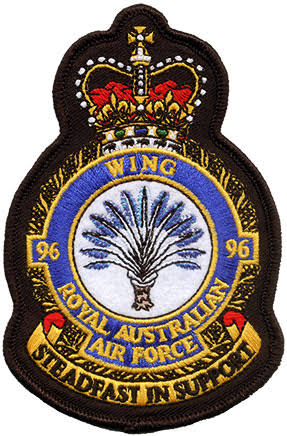
No. 96 Wing RAAF (originally formed as No. 396 Combat Support Wing) – Formed on 20 November 2000 at RAAF Base Darwin to streamline air base operational support.

In December 2001, a restructure saw almost all Air Force Health Services Flights reassigned to another command centre. However, Darwin, Townsville, and Butterworth stayed as part of the renamed No 396 Wing. Another restructure on 1 July 2005 saw Air Command fixed air bases come under the command of the Officer Commanding No 396 Combat Support Wing, which meant No 396 now included a headquarters and Nos 321 (Darwin), 322 (Tindal), 323 (Townsville) and 324 (Butterworth) Combat Support Squadrons (as per past command allocations), as well as the Combat Support Units at Amberley, Edinburgh, Richmond, and Williamtown.

Another restructure changed the assignment of units again on 1 January 2007, with the Wing renamed to No 396 Expeditionary Combat Support Wing. In 2009, further reforms saw an expansion of the Wing's responsibilities, and from 1 July 2010 the Wing had command of the 12 city squadrons. On 1 August 2011, some city squadrons were transferred away from the Wing.

On 1 January 2014, a staged restructure resulted in the name changed to 96 Wing, and again, the city squadrons were reassigned. Following additions to the Wing on 1 October 2017, No 96 Wing now has eleven city squadrons, three other squadrons (dispersed across Australia), and No 19 Squadron in Malaysia under its command. It also has responsibility for the RAAF Bare Bases at Learmonth, Curtin, and Scherger.

And for the children onboard, we are nearly there and will remain nearly there till we get there.


Marvin (The Paranoid Android)Errors
We try and make sure this magazine is as accurate as possible and that it contains no errors.
If you find any, be they incorrect links, spelling mistakes, or factual errors,
please let me know so I can correct them.

You can contact us by using the 'Contact Us' link at the top of each page
(or send an email to me at
brad@radschool.org.au.)

Back to Top


Print this page